

Monday, March 8
-
Mission Partner or Investor? How the Government-Commercial Space Relationship Is Evolving
The government's posture toward commercial space has shifted from acting purely as a customer to taking on part investor, part regulator, part operational integrator roles as agencies increasingly embed commercial connectivity and data services into mission-critical workflows. This session examines where that relationship is working, where procurement structures and classification barriers still prevent it from reaching its potential, and what both sides need to change to move from transactional vendor relationships toward genuine mission partnership.
 Sherin KamalSr. Advisor to JTNC Director, Joint Tactical Networking CenterU.S. Department of WarDr. Kamal is an international business executive with extensive experience in driving revenue and profitable growth in the defense, cybersecurity, Intel and telecommunications sectors; for both domestic and international markets. He has held positions as CEO, COO, CTO/VP Engineering and Founder/Entrepreneur. He has led initiatives in government, the private sector and for international enterprises. He's a 3-time founder of tech startups and served as Chief Scientist in multibillion$ organizations. He is frequently invited as a speaker and Special Panel Chair at technology and business forums, Military Conferences and Strategic Taskforces. Dr. Kamal is a trusted advisor to senior government defense and security leaders on modernization policy and technology matters.
5G NTN and the Race to 6G: Where the Money Is and Who Gets There First
The 3GPP standardization of Non-Terrestrial Networks has formally embedded satellite connectivity into the 5G architecture, opening a multi-billion dollar opportunity at the intersection of mobile and space -- but the investment landscape is anything but settled. This session maps where capital is flowing across the NTN value chain: from chipset and modem vendors integrating NTN support, to MNOs negotiating roaming and offload agreements with satellite operators, to the constellation builders competing for anchor partnerships. Panelists will also look ahead to 6G, where the ITU and regional standards bodies are already shaping assumptions about integrated terrestrial-satellite architectures. Will satellite operators end up as primary infrastructure or as wholesale capacity providers in the 6G world?
-
Embedding Machine-Learned Anomaly Detection into Relevance-Driven Mission Operations Workflows
Anomaly detection has become a central application of machine learning in satellite operations; however, when applied in isolation, machine learning-based detections alone are insufficient to support scalable mission operations. As fleets grow, operators face increasing cognitive load not from anomaly frequency, but from the need to interpret weak signals, correlate them with operational context, and decide whether and how to act. This paper presents an operationally grounded approach in which machine-learned anomaly scores are treated as inputs to a relevance-driven decision workflow rather than as standalone alerts. We describe Mercury, an AI-based mission intelligence engine designed for continuous, mission-adaptive and unsupervised anomaly detection across telemetry streams, producing interpretable anomaly scores to characterize deviations from learned nominal behavior. These scores are not surfaced directly to operators. Instead, they are combined with additional signals from the ground segment--e.g. system state, operational modes, and scheduled activities--through a deterministic relevance-filtering layer. The system applies rule-based logic to combine anomaly probabilities with operational conditions, ensuring that only events with real operational impact are flagged. These operational events are enriched with contextual information required for investigation and decision-making. The architecture is natively integrated with EASE-Rise, a cloud-native mission control and operations platform developed by Telespazio Germany. Telemetry and operational context flow from mission control to the intelligence layer, while prioritized events and recommended command sequences are fed back into the mission control environment, preserving established procedures and operator authority. The approach has been evaluated on representative small satellite operational scenarios, where Mercury has demonstrated actual reductions in false escalations, investigation time, and routine monitoring effort, enabling operations to scale without linear increases in operator workload.
Daniele BellomiChief Commercial OfficerIntella s.r.l -
Proliferated Warfighter Architectures: Designing Defense Constellation Services for the Threat Environment
The Space Development Agency's Proliferated Warfighter Space Architecture represents a fundamental rethinking of how the DoD delivers space-based services, favoring large numbers of simpler, cheaper satellites over a smaller, exquisite system. Designing services for that architecture requires confronting adversary capabilities that are evolving faster than acquisition cycles. This session brings together constellation designers, warfighter requirements owners, and threat analysts to examine what resilience actually demands in today's contested environment.
Sho NakanoseFounder/CEOGITAISho Nakanose is the Founder and CEO of GITAI, the world's leading space robotics startup. He aims to provide safe and affordable labor in space, reducing operational costs to one-hundredth of the current levels. In March 2024, GITAI achieved a groundbreaking milestone by successfully conducting a technical demonstration outside the International Space Station (ISS), showcasing advanced robotic technologies that promise to change the dynamics of space operations. The company's innovative work has attracted contracts from DARPA, major US space companies, TOYOTA, the Japanese government, JAXA, and others. These partnerships focus on developing and integrating GITAI's robotic systems into various space programs. Nakanose has been named a key person to watch in the space sector in 2024 by AviationWeek and was selected as one of the awardees by "Innovators Under 35 Japan 2020" hosted by MIT Technology Review. He is proud to be the first Japanese selected for the main program (Global Solutions Program) of Singularity University at NASA Ames Research Center in the US. Prior to founding GITAI, he worked for IBM Japan.Bye-Bye, Bent Pipes: The Case for True Orbital Networks
For most of satellite history, the bent-pipe transponder, which receives a signal, frequency-shifts it, and retransmits it with no onboard processing, defined the architecture of commercial satellite systems. This session makes the affirmative case for on-orbit processing, inter-satellite links, and network intelligence as genuine replacements for the bent-pipe model rather than incremental additions to it. Panelists will examine where regenerative payloads and orbital routing already outperform the traditional model on latency, flexibility, and spectral efficiency, and where the cost and complexity of smarter satellites still struggles to justify itself against a simpler, cheaper transponder. The conversation will also address what the shift means for ground system vendors whose business models have historically depended on keeping intelligence earthside.
 Declan GanleyFounder & CEO of Rivada Space NetworksRivada Space NetworksDeclan Ganley is an entrepreneur and the founder, chairman & CEO of Rivada Networks, a leading innovator in market-driven wholesale wireless network sharing and provider of broadband communications services. Rivada Networks is sole owner of Rivada Space Networks, which is deploying a fully networked 600-satellite LEO constellation. Declan is co-inventor of 48 patents in the wireless sector, including Rivada's core Dynamic Spectrum Arbitrage technology. Rivada's DSA and tiered priority access patents enable the dynamic sharing of wireless networks, lowering barriers to entry and driving innovation in wireless. Rivada Networks has provided award-winning emergency communication services in the US to customers including the Department of Homeland Security, US Northern Command, the National Guard and leading police forces. Rivada has been in operation since 2004 and has continued to successfully grow its customer base and services in the US and elsewhere. Rivada has offices in Co. Galway, Ireland, Munich, Germany, and Washington DC.
 -
Failover as a Service-Affecting Event: Measuring Session Continuity Across Mixed-Orbit and Single-Tier Satellite Architectures
Satellite architectures are increasingly described with one term, multi-orbit, that conflates two different designs: combining LEO, MEO, and GEO across altitude tiers, and aggregating networks within one tier. This presentation treats that conflation as a measurable question, and examines an assumption the data does not support: that failover constitutes resilience. Method. The analysis synthesizes measurement data from Ookla, FCC reporting, operator telemetry, APNIC Labs transport research, and Congressional Budget Office robustness analysis, alongside observations from production multi-path deployments. Limitations are stated, including non-comparability of consumer and enterprise figures. Findings. Three latency tiers separate cleanly. LEO at ~550 km measures 25.7 to 45 ms median RTT with 6.7 to 9.2 ms jitter and handoffs every 15 to 90 seconds. MEO at 8,063 km delivers under 150 ms under SLA. GEO at 35,786 km measures 683 to 684 ms. That 15x differential propagates upward. Receiver window requirements scale with the delay-bandwidth product: a 155 Mbps link needs ~600,000 bytes on single-hop LEO and 8,704,000 bytes on GEO, a 14x difference. Congestion control diverges similarly: Cubic achieves high LEO throughput while inflating latency through buffer occupancy, and BBR performs well over GEO while underutilizing LEO bandwidth. No single algorithm serves both. Failover is where these effects become service-affecting. It is a recovery mechanism, not a continuity mechanism: it triggers after degradation is detected, and active TCP sessions break in the process. When the recovery path sits in a different tier, that interruption compounds with window recalibration and jitter buffer adjustment. ITU guidance of 150 ms one-way latency for voice is exceeded by GEO alone, so cross-tier recovery breaks real-time sessions rather than degrading them. Cross-tier transitions also change propagation, modem waveform, and frequency band at once. Intra-tier aggregation behaves differently. Major LEO constellations occupy a 20 to 60 ms band: Starlink ~550 km, Amazon Leo 590 to 630 km, OneWeb 1,200 km, Lightspeed ~1,000 km. Within that band, bonding avoids the packet reordering mixed-latency aggregation produces, applications tuned to one profile keep performing across constellation transitions, and tunneled bonding allows path changes without breaking active sessions. Segment-based rerouting research reports up to 30 percent fewer message drops and 80 percent fewer routing loops versus single-constellation approaches under high failure. Contribution. The presentation proposes a taxonomy separating multi-orbit, multi-constellation, and multi-path architectures with measurable criteria, argues resilience should be measured by session continuity rather than availability, and identifies open questions: inter-satellite link variability, aggregation beyond two constellations, and the absence of standardized enterprise measurement methodology across providers.
Grant KirkwoodFounder, CEOContrivian Inc -
Geospatial Intelligence at Machine Speed: How AI Is Changing What Analysts See
The volume of imagery and synthetic aperture radar data flowing from commercial and government constellations has long since outpaced human analytical capacity, making AI-driven exploitation not a future capability but a present operational necessity. This session examines the specific algorithms, data pipelines, and human-machine teaming models that are producing actionable GEOINT today, and where algorithmic confidence, training data quality, and adversarial spoofing still limit what decision-makers can trust.
Steven KosvickConstellation ArchitectICEYE USGround Segment Modernization: What It Costs and What the Market Looks Like After
The satellite ground segment is undergoing a major transformation from traditional antenna farms into integrated digital infrastructure hubs. Increasingly, satellite ground stations are being co-located with data centers to reduce latency, eliminate long terrestrial backhaul links, and enable real-time processing and distribution of satellite data. At the same time, virtualization and Ground Segment-as-a-Service (GSaaS) models are changing how operators access ground infrastructure. This session will explore the cost and benefits of these transformations in the era of cloud-native architectures. This session is produced in partnership with the World Teleport Association (WTA).
-
Space Domain Awareness: Who Owns the Picture and Can We Trust It?
As the number of objects in orbit grows and adversary counterspace capabilities mature, the question of who has authoritative situational awareness of the space domain has become both a strategic and technical issue. How will we know whether or not space domain awareness is accurate, timely, and shareable with allies? This session examines the current patchwork of government, commercial, and allied SDA contributors, the data fusion and attribution challenges that undermine confidence in the picture, and the governance questions about who has authority to act on it.
Moderator
Dhruv JainAstrodynamics EngineerKayhan Space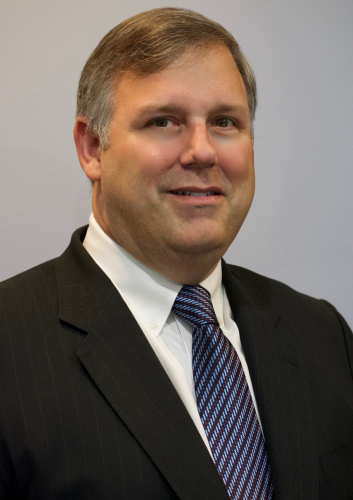 Andrew D'UvaStrategy and Policy AdvisorSpace Development AgencyAndrew D'Uva is President of Providence Access Company, a government affairs, technology, and satellite consultancy. He has supported international commercial satellite and telecommunications businesses on the regulatory, policy, legal, operational and business fronts for more than two decades, with a present emphasis on government services, information assurance, and cybersecurity in support of national security missions. Satellite clients have included key communication satellites owner-operators, trade organizations, and U.S. Federal agencies. D'Uva coordinates the activities of the SATCOM Industry Group (SIG), dedicated to improving the communications capabilities afforded in support of U.S. national security missions and helped instantiate the DoD's Commercial Integration Cell (CIC). D'Uva was the principal editor of the most recent National Security Telecommunications Advisory Committee Satellite Task Force Report, and is U.S. industry chair of the Commercial Space INFOSEC Working Group of the NSA/DISA. He was a founding executive of New Skies Satellites (now SES) and an attorney at Willkie Farr & Gallagher.
Who Will Win Satellite IoT's Massive Multibillion-Dollar Market?
The addressable market for satellite IoT spans agriculture, maritime, logistics, utilities, environmental monitoring, and remote asset tracking. The list of operators competing for this market has never been longer or more fragmented. This session assesses the competitive field: direct-to-device players, dedicated narrowband IoT constellations, and broadband operators adding IoT service tiers are all pursuing overlapping customer bases with very different technical and commercial propositions. What actually determines market share in this space? Is it coverage, power consumption, message latency, device cost, or the depth of vertical-specific integration that enterprise customers increasingly demand?
Protecting the Command Path: Post-Quantum Authentication and Recoverable Firmware Trust for Long-Lived Satellites
Satellite command paths and firmware-update mechanisms represent unusually high-consequence trust relationships. A forged command, a compromised signing key, a malicious firmware image, or a failed credential transition can affect an entire mission. Unlike terrestrial systems, an operator may have no physical access to recover a spacecraft after launch. Long mission lifetimes, intermittent communication, limited bandwidth, constrained onboard computing, and dependence on pre-established trust anchors make post-quantum authentication a mission-resilience problem, not simply an algorithm-selection exercise. This presentation proposes a recoverable post-quantum trust architecture for satellite command authentication, secure boot, onboard software, and firmware updates. The architecture separates offline mission roots, operational command authorities, firmware-signing services, ground-station identities, and onboard verification keys to limit the effect of a single credential compromise. It combines post-quantum digital signatures with role separation, command sequencing, anti-replay controls, pre-positioned credential epochs, protected recovery keys, and authenticated activation procedures. The technical evaluation considers ML-DSA and SLH-DSA, together with stateful hash-based alternatives such as LMS or XMSS where operational key-state controls are feasible. Rather than declaring a single algorithm appropriate for every mission, the study compares signature size, verification time, processor and memory utilization, onboard storage, key management complexity, bytes transmitted per contact window, and recovery behavior. The proposed test scenarios include a valid command sequence; replayed and delayed commands; unauthorized command sources; compromised ground credentials; missed key rotations; loss of time synchronization; interrupted firmware transmission; corrupted images; attempted downgrade to vulnerable software; and failure of a newly activated verification key. The architecture uses authenticated version metadata, monotonic security state, staged activation, independent image verification, and recoverable fallback paths to prevent an unsuccessful cryptographic transition from permanently disrupting spacecraft control. The presentation examines hybrid verification periods in which classical and post-quantum trust can coexist until defined technical and operational acceptance conditions are satisfied. Attendees will receive a reference trust architecture, an algorithm-selection matrix, a command-authentication test plan, a firmware-transition workflow, and a recovery checklist. The work extends existing post-quantum cryptography and secure migration research to a focused satellite use case in which authentication failure can threaten both cybersecurity and mission survival.
Dr. Ankit GuptaPhD Researcher in PQCUniversity of North TexasAnkit Gupta is a cybersecurity architect and applied researcher whose work focuses on post-quantum cryptography, cryptographic agility, cloud and application security, and cyber resilience for critical infrastructure. He is pursuing a PhD in Information Science with a concentration in Cybersecurity at the University of North Texas. His peer-reviewed research and technical publications address post-quantum migration, quantum-safe security architectures, enterprise and cloud cryptography, ICS and SCADA security, identity security, and AI-assisted resilience. In industry, he has worked across application security, API security, DevSecOps, secrets management, data protection, and cloud security. His current research develops vendor-neutral and testable methods for cryptographic inventory, hybrid transition, interoperability, performance validation, operational continuity, and rollback, with emerging applications to satellite communications and long-lived mission systems. -
Hardware Security Attacks and Defense in Satellite Communication
Satellite communication relies on a strong identification mechanism to authenticate terminals and prevent abuse. Recent experience in conflict areas has shown that access to satellite communication can be instrumental in getting a decisive advantage on the battlefield. When the stakes are high, adversaries are prepared to go a long way to gain this advantage, and do not shy away from using complex and expensive methods to bypass security measures. In this presentation, we explain how physical security works, as well as why and how it is attacked. We show that this often is a cat-and-mouse game and use examples from the field to illustrate this. We will first review the principle of a root-of-trust, and the architecture of secure boot. This will include cryptographic signing and encryption schemes. We will see how logical protection relies on physical protection. We will also review the dilemma of storing firmware in persistent memory, versus making it updateable. Then, we review the main hardware attack vectors. These include direct hardware access to various (hidden) interfaces, but also listening in to side channels, or manipulating functionality through fault injection. We will discuss attacker considerations and goals. Next, we will review a few real-life cases of attacks on satellite communication systems and see how these attacks facilitate different attacker goals. Finally, we will look at attack countermeasures at various levels, including hardware, software, and application level. We will see that an effective defense would need a mix of measures. While perfect security does not exist, there is often a path to effective security that would discourage adversaries by making attacks impractical.
Marc WittemanSenior Director Device SecurityKeysightMarc Witteman has more than 25 years experience in device security testing. In 2001 he founded Riscure, a world-renowned security testing company. He did groundbreaking research into physical attack techniques, such as side channel analysis and fault injection, and developed tooling to help device makers and test labs to verify the robustness of their products. Marc frequently speaks at events on security threats, but also on how to make products more secure. In 2024 Riscure was acquired by Keysight, and Marc now leads the Keysight Device Security team. At Keysight his mission is to scale the best approaches for attaining security. -
Military Space Tech Opportunities for Non-Traditional or Startup Companies
Moderator
Janelle Teng WadePartnerBessemer Venture PartnersJanelle Teng Wade is a partner at Bessemer where she focuses primarily on early-stage investments in AI/ML apps, data infrastructure, frontier tech, and defense tech. She is passionate about supporting highly technical teams and founders from research backgrounds. A science enthusiast at heart, Janelle studied human biology and economics at Stanford University, where she graduated with academic distinction and departmental honors. She also earned an MBA at Harvard Business School.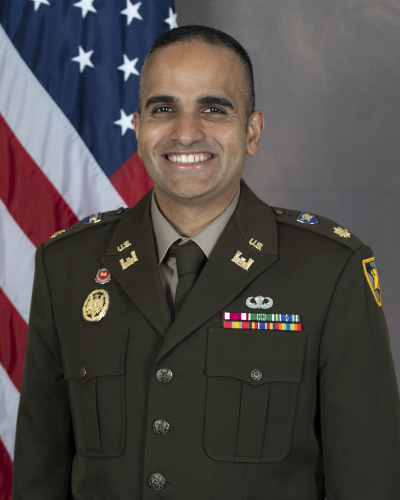 Robert Perez-Alemany Lt. Col. (S), U.S. ArmyProgram Manager, Space PortfolioU.S. Defense Innovation Unit (DIU)Robert Perez is a Program Manager in the Space Portfolio for the Defense Innovation Unit (DIU), Office of the Secretary of Defense. Since joining DIU in 2024, he has collaborated with companies like Northrop-Grumman, Avalanche Energy, BlackSky Technology, X-Bow Systems, Revolution Space, and Anello to deliver advanced technologies to the Warfighter, enhancing readiness for future challenges. These projects range from tactical imaging to nuclear fusion reactors and innovative propulsion systems. Before this role, he served as an Assistant Professor in the Department of Physics & Nuclear Engineering at the U.S. Military Academy, West Point. Born and raised in Puerto Rico, Robert graduated from West Point in 2010 with a Bachelor of Science in Mathematics and commissioned into the U.S. Army Corps of Engineers. He later earned a Master's in Public Administration from Columbus State University, GA, in 2013. From 2010 to 2014, he served as a Combat Engineer in the 3rd Brigade Special Troops Battalion, where his platoon became the first Army unit to receive, test, and train with the Assault Breacher Vehicle, a system for clearing mines and obstacles. In 2015, he became Chief Engineer of Operations at the Western Hemisphere Institute for Security Cooperation, training international military and police officers in search and rescue, demining, and engineering operations. Between 2016 and 2018, Robert was the first Company Commander for the Maneuver Captain's Career Course to be appointed Fort Benning's Senior Engineer Instructor. He oversaw the training and mentorship of thousands of Captains and junior officers in foundational engineering courses. His passion for Army Space Operations led him to the Naval Postgraduate School in 2018, where he became the first Army Officer to complete the Astronautical Engineering Master's Program. He earned dual master's degrees in Aerospace and Astronautical Engineering, along with certifications in Space Fundamentals and Trajectory Optimization. His research included rotating detonation rocket engines, space debris, and hypersonic rockets, supporting Strategic Command's efforts in contested environments. From 2020 to 2024, Robert taught Physics II: Electricity and Magnetism at West Point and became its Course Director. He also founded the Army Rocketry & Engineering Sciences Program, focusing on launch vehicles, CubeSat development, and propellant engineering. The program gained national recognition in the NASA Student Launch Initiative, earning awards for Best Service Academy and AIAA Rookie of the Year. An accomplished author, Robert has published extensively on space radiation, small satellites, rocketry, space debris, and rocket propellants.
AI in the Control Loop: What's Working in Space Operations Today
AI has been a transformational force in satellite operations for years, but this session focuses specifically on what has moved from demonstration into production -- autonomous collision avoidance maneuvering, AI-assisted spectrum monitoring, predictive battery and thermal management, and ground network orchestration that reduces operator workload on large constellations. Panelists will be direct about where machine learning models have earned operational trust and where human-in-the-loop requirements remain non-negotiable. Attendees will also learn about the data infrastructure and simulation environments required to train and validate models for space operations.
Tuesday, March 9
-
CTO Forum: The Efficiencies and Security Concerns Over AI Integration
SATShow's annual CTO Forum brings the top technical leadership minds in the satellite industry together to address critical developments in satellite products and services. This year's Forum focuses on the risk and rewards of broader AI integration in satellite operations. The satellite industry has been utilizing machine learning AI for many years. Large language models and agentic AI, however, are becoming central to satellite operations. Recent news stories of AI models going rogue creates trust and security friction points. Industry leaders noted that while AI can identify network anomalies and even recommend corrections, whether customers in 2026 will allow systems to automatically make those changes is still an open question. This panel seeks to answer those questions and more about the risks and rewards of AI integration and what that means for the future of satellite services and technology.
Luca PetronzioChief Technology and Innovation OfficerTelespazio S.p.A. -
Multi-Orbit or Multi-Constellation: The Architecture Debate the Industry Hasn't Settled
The proliferation of LEO, MEO, and GEO constellations has given network architects more options than ever -- and more trade-offs to navigate. This session examines the core tension between multi-orbit designs (combining orbital regimes for complementary performance) and multi-constellation approaches (leveraging redundancy within a single orbit across multiple operators). Panelists will weigh latency, throughput, handover complexity, and cost against real-world operational requirements across commercial and government use cases. The goal isn't consensus, but clarity on where each architecture wins.
Moderator
Grant KirkwoodFounder, CEOContrivian Inc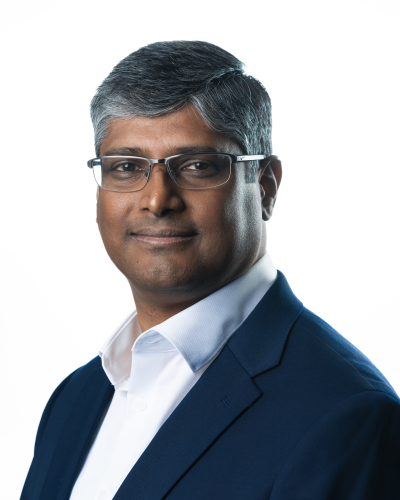 Sridhar KuppannaCEOST Engineering
Tactical SATCOM for Disrupted Military Operations
In contested and degraded environments, no single SATCOM link can be assumed reliable -- which is precisely why PACE (Primary, Alternate, Contingency, Emergency) planning has become central to military communications doctrine. This session, aimed at program managers, systems integrators, and defense operators, explores how multi-orbit satellite architectures can be structured to satisfy each tier of a PACE plan, ensuring warfighters maintain connectivity even when adversaries actively target specific bands or orbital layers. Speakers will address the practical challenges of terminal switching, waveform compatibility, and operator agreements that make multi-orbit PACE planning executable rather than theoretical.
Dave BroadbentPresident and CEOSES Space & DefenseDavid Broadbent is President & CEO of SES Space & Defense effective 17 July 2025. Broadbent joined Intelsat in November 2023 from RTX, where he served most recently as president of the company's Space Systems business unit. Broadbent had been with Raytheon for more than 20 years in various senior business development, program execution, contracts, supply chain management and financial planning roles. Before joining Raytheon's Integrated Defense Systems team in the U.K. in 2002, he worked with Vickers Defence Systems in engineering design, supply chain, and program management in both Germany and the U.K. Broadbent earned a bachelor's degree in mechanical engineering from Newcastle University and completed postgraduate studies in contract law at Northumbria University.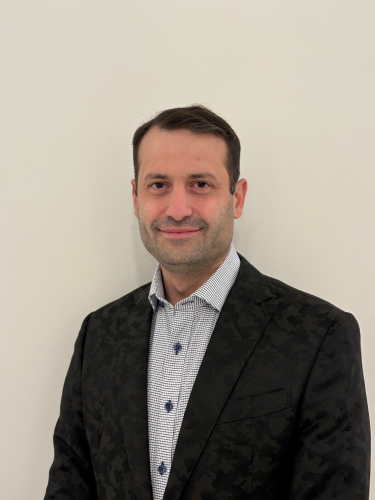 Andrew ColaruotoloChief Strategy OfficerLite ComsAndrew Colaruotolo is a seasoned expert in tactical satellite communication systems for the ground segment. Andrew has over 16 years of experience delivering communication systems to the US DoD and Coalition forces around the globe. With Lite Coms, Andrew has been a leader in developing and delivering constellation agnostic satcom terminals. Lite Coms is driving to deliver resilient multi-orbit technology to our Warfighters.
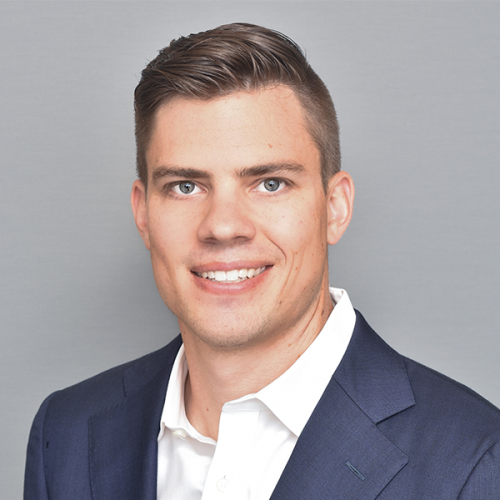 Daniel GizinskiCEOComtechDaniel Gizinski is CEO of Comtech. Previously, Daniel served as Chief Strategy Officer and President of the Comtech Satellite Network Technologies ("CSNTI") division. Daniel also held prior appointments as the Company's Chief Strategy Officer from 2022-2024 and President of CSNTI in 2022. During his tenure at Comtech, he has held various senior management positions, including serving as Vice President of Product and Strategy for Comtech Systems, Inc. Earlier in his career, Gizinski held program management and leadership roles at General Electric, Sierra Nevada Corporation, and L3Harris Technologies. Gizinski holds a bachelor's degree in electrical engineering from the University of Virginia and a master's degree from Duke University.
Sovereign Networks: Why Satellite Operators Are Becoming National Infrastructure Partners
Governments around the world are reconsidering their dependence on foreign-owned satellite infrastructure. A wave of sovereign constellation programs in Europe, the Middle East, Asia, and Latin America, reflects a fundamental shift in how policymakers view space connectivity. This session examines the forces driving this trend: data sovereignty concerns, national security requirements, the lessons governments drew from commercial satellite dependence during recent conflicts, and the economic development arguments for building domestic space industrial bases. Panelists representing operators, government customers, and policy advisors will debate what "sovereign" actually means in practice and whether it demands domestic ownership, domestic manufacturing, domestic launch, or simply contractual control over network access.
Moderator
Jillian QuigleyAssociateWiley Rein LLP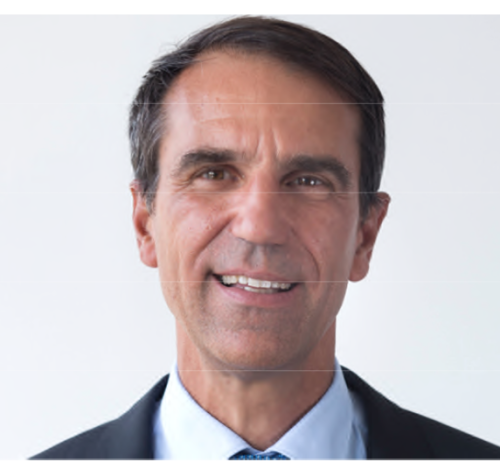 Hervé DerreyCEOThales Alenia SpaceHervé Derrey is Chief Executive Officer of Thales Alenia Space. He was previously Senior Vice President and Chief Operating Officer of the Thales Secure Information and Communications Systems Global Business Unit. In 2011, he was named Vice President, Strategic and Infrastructure Networks, then from 2012 to 2016 served as Vice President for Thales' global Radiocommunication Products Business Line. From 1991 to 2011, Hervé Derrey held various management positions in France and abroad, first at Alcatel, then Alcatel Lucent, with a particular focus on mobile networks and applications, broadband internet and digital transformation. A graduate of École Polytechnique and Telecom ParisTech, Hervé Derrey, 53, also holds a degree from the Institut des Hautes Etudes de Défense Nationale (IHEDN), the national defense college.
Edge-Deployable Physics-Informed and Quantum Assisted Neural Networks for Real-Time Autonomous Orbit Prediction
Real-time autonomous satellite operations, including conjunction assessment, collision avoidance, and rendezvous and proximity operations, are increasingly limited by onboard computational resources. Existing solutions span two extremes: analytical propagators such as SGP4, which provide high-speed but low-fidelity predictions, and numerical frameworks such as Orekit, which deliver high accuracy at computational costs often unsuitable for flight hardware. As autonomy expands from low Earth orbit (LEO) to cislunar regimes, there is a growing need for propagation methods that balance physical fidelity, inference speed, and resource efficiency. This work investigates Physics-Informed Neural Networks (PINNs) and Quantum-Assisted PINNs (QA-PINNs) as surrogate models for onboard orbital propagation. The proposed PINN incorporates orbital dynamics directly into the learning process through physics-informed losses and hard constraints, enabling physically consistent predictions under noisy or sparse training conditions. The QA-PINN extends this architecture by replacing the classical hidden layer with a variational quantum circuit, reducing model parameterization while preserving the overall network structure. We benchmark SGP4, Orekit, constrained PINN, and QA-PINN implementations on a Jetson Nano representative of CubeSat-class computing platforms. Performance is evaluated in terms of propagation accuracy, throughput, memory footprint, long-horizon stability, and maneuver detection capability. In addition, we investigate uncertainty quantification methods to produce confidence-bounded predictions suitable for autonomous decision support. The results provide a systems-level assessment of physics-informed and quantum-assisted machine learning for onboard orbit prediction and maneuver planning. By directly comparing these approaches against established propagators on resource-constrained hardware, this work advances the development of scalable, real-time autonomy for future satellite missions.
Alex KhanVice President of Quantum R&DBosonQ Psi Corp (BQP)Alex Khan is a quantum computing advisor, researcher, and educator specializing in applied quantum optimization and hybrid classical-quantum systems. He serves as Vice President of Quantum R&D at BQP (formerly BosonQ Psi), where he leads research integrating quantumâ€'inspired and NISQ-era algorithms with physicsâ€'based simulations, machine learning, and optimization for aerospace and advanced engineering applications. He is also a Fellow at the University of Maryland's National Quantum Laboratory (QLab) and an active member of the regional and national quantum ecosystem. Alex is the author of "Quantum Computing Experimentation with Amazon Braket" (Packt Publishing) and has published widely cited research on quantum and hybrid optimization, portfolio optimization, and quantum algorithms, with more than 150 citations on Google Scholar. He holds an MBA from Duke University, engineering degrees from Purdue University and Kansas State University, and professional certificates in quantum computing and AI/ML. His career bridges industry leadership, academic research, workforce development and helping organizations move quantum computing from experimentation to practical impact. -
LEO-Aware Routing for Enterprise Networks
Enterprise low-Earth-orbit satellite deployments typically present a conventional Ethernet handoff to the attached router. Although the satellite terminal may expose real-time measurements such as obstruction state, signal quality, available capacity, latency, and packet loss, those conditions are not visible across the router's Ethernet boundary. The Ethernet interface can remain operational even when the underlying satellite service is severely degraded, forcing the network to react only after probes, protocol timers, or user traffic reveal the impairment. This presentation introduces a transport-independent architecture for securely collecting telemetry from unmodified commercial LEO terminals through vendor-provided application programming interfaces. A router-hosted edge application translates vendor-specific measurements into a normalized set of attributable, time-bounded key performance indicators. These signals can support unified operational dashboards and, through a decoupled registry, become inputs to controlled routing and Quality of Service policies. A proof-of-concept demonstration will show a router-hosted application polling live Starlink terminal telemetry, interpreting changes in service conditions, and producing a policy-ready signal. The presentation will examine implementation considerations including vendor API variability, polling frequency, telemetry freshness, confidence, thresholding, hysteresis, security boundaries, and safe failure behavior. Attendees will learn how to establish multivendor LEO visibility without requiring terminal modifications, how to separate telemetry collection from network enforcement, and how organizations can progress safely from dashboard insights to advisory decisions and ultimately to bounded path selection, link-bundle membership, and adaptive traffic shaping.
Tom KunathSolutions ArchitectCisco SystemsAcross 30+ years in networking and 20+ years at Cisco, I have worked with enterprise and service-provider organizations through multiple generations of WAN transformation--from performance routing and IWAN to SD-WAN, multicloud connectivity, and non-terrestrial networks. Today, my work centers on: • Shaping resilient SD-WAN and routing architectures for critical environments • Integrating terrestrial and satellite transports into a unified enterprise WAN • Translating field experience into product direction, validated designs, and practical guidance • Advising customers and partners on complex availability, performance, segmentation, and transport challenges • Teaching and mentoring through Cisco Live, technical publications, design programs, and hands-on learning I am especially interested in the next generation of context-aware routing: networks that use real-time transport conditions, application intent, and operational telemetry to make better path decisions across terrestrial, cellular, and satellite domains. I enjoy working where architecture, product strategy, customer outcomes, and emerging technology meet--and making the complex usable for the engineers who have to deploy it. -
Laser Communications at Scale: ISLs, Ground Stations, and the Interoperability Gap
Optical inter-satellite links have moved from experimental to operational, with several major LEO constellations now routing traffic through laser crosslinks rather than relying exclusively on ground infrastructure. This session addresses what it takes to scale laser communications beyond a single operator's closed network -- including the ground station infrastructure, pointing and acquisition protocols, and atmospheric compensation technologies that determine system reliability. Panelists will confront the interoperability gap directly, as more constellations and ground networks deploy optical terminals. Attendees will leave with a clearer picture of where the standards bodies, operators, and hardware vendors are aligned and where they aren't.
Jeff HugginsPresidentCailabsJeff Huggins is an aerospace and defense sector expert, growth leader and President of the U.S. arm of Cailabs, a global company and leading player in laser communications. After leaving behind a distinguished career as a Naval Intelligence Officer, during which he focused on national overhead and intelligence systems, Jeff moved into the private sector, where he held senior roles at several major companies, including Israel Aerospace Industries North America and Raytheon. He led the expansion of an established $24 million company, driving it to more than $40 million in value between 2016 and 2020, and served as the CEO and Chairman of the Board of the U.S. classified aerospace wing of Safran. Safran, a major French aviation company, is the second-largest aircraft equipment manufacturer in the world. Jeff, who also worked as a presidential appointee in the State Department, holds a Bachelor of Science in engineering from the U.S. Naval Academy and an MBA from the Darden School of business at the University of Virginia with additional graduate studies at the Naval War College and the Naval Postgraduate School. He is considered an expert in combining the creative applications of tech, people and solutions to grow companies. At Cailabs, he is driving growth in the U.S. to meet rising demand from the defense and commercial sectors.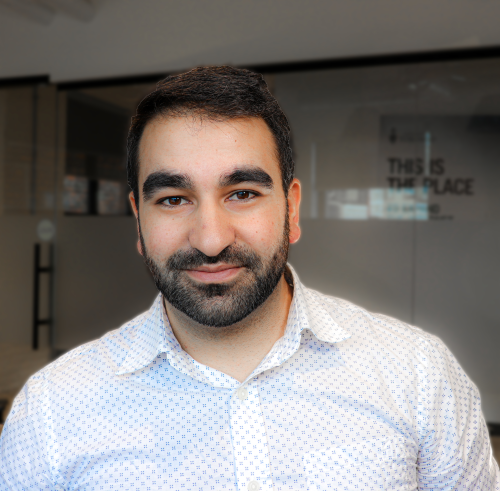 Mina MitryCEO and Co FounderKeplerMina Mitry is the Co-Founder and CEO of Kepler Communications, a company on a mission to build Internet connectivity for space to improve access to space-generated data. Kepler was founded in 2015 after Mina and a group of graduate students recognized a gap in the global space market and set out to create the infrastructure to support the current and future communication needs of the space industry, ultimately empowering human reach outside of Earth. Under Mina's leadership, Kepler has raised over $200 million USD in funding, growing to the largest Canadian satellite operator. Kepler was the first company in the world to launch Ku-band in low Earth orbit and has received notable industry recognition, being named one of the most innovative space companies in the world by Fast Company in 2020 and a "Top 10 in Satellite" from Via Satellite in 2023. Mina has helped to shape Kepler into a company that understands the full lifecycle of satellite operations and the many challenges customers face when executing their missions. The company is vertically integrated, designing, building, and operating the current network of 21 satellites, with an optical constellation in development. Kepler's next-generation optical constellation will modernize on-orbit communications with a network infrastructure designed to act as Internet exchange points for space-to-space data relay. The Internet-ready constellation will deliver data to and from spacecraft in near-real-time, enabling high-speed, low-latency data relay through SDA-standard optical terminals. Kepler launched its first two optical Pathfinder satellites in the Fall of 2023, with full operations expected in 2025. Mina currently serves as a mentor at Creative Destruction Lab and is on the advisory committee for RSSSA. Prior to Kepler, Mina commercialized his graduate research work on numerical methods and machine learning at a major aircraft engine manufacturer. He also built and scaled a not-for-profit at the University of Toronto from 5 to 100 volunteers and 28M in annual sponsorship, and Directed Engineering at TeaBOT, helping to build and scale the business in food and beverage automation. Mina holds a Master of Aerospace Engineering degree from The University of Toronto. He lives in Toronto, Canada, with his wife Maya, son Mason, and dog Toby.
Reconfigurable Satellites: What Software-Defined Architecture Changes for Buyers
Software-defined satellites represent a genuine departure from the fixed-payload model that has governed commercial satellite procurement for decades. This session examines what that flexibility means in practice for satellite buyers and lessees: the ability to respond to traffic shifts without launching new hardware; to trial new market segments without long-term capacity commitments; and to adapt to regulatory changes in frequency assignments or coverage regions. Panelists will also address new negotiating dynamics between operators and customers when capacity can be redirected overnight, the cybersecurity surface area that reconfigurability introduces, and the question of whether buyers are actually using the flexibility they're paying for. The session is particularly valuable for enterprise and government customers evaluating software-defined capacity against traditional long-term transponder agreements.
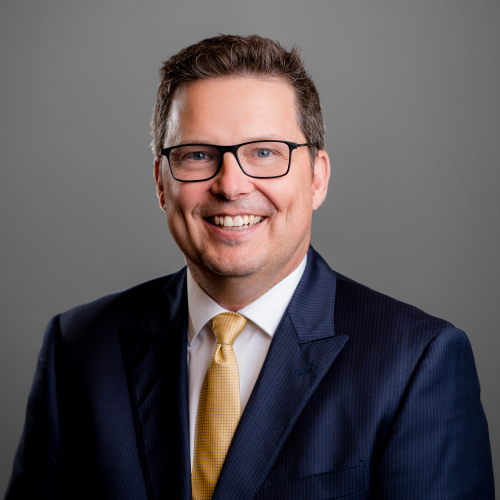 Greg QuiggleSenior Vice President of Product ManagementKratosGreg Quiggle serves as the Senior Vice President of Product Management at Kratos, where he is responsible for overall product strategy and ongoing lifecycle management of Kratos' commercial product portfolio. Prior to joining Kratos, Quiggle served as the Vice President of Emerging Products for VT iDirect, during which time he played an instrumental role in developing the company's 5G/SDN strategy and ecosystem. Additionally, he has served as the Executive Vice President of Marketing for Tollgrade Communications and the Vice President of Marketing for Acterna Corporation (now Viavi). In these roles, he has spent over 25 years conceptualizing and executing successful, corporate-level product and technology strategies within the communications industry.
Beyond TOPS and Watts: Why the Next Constraint in Space Edge Compute Is Coordination, Not Capacity
Advances in space-based edge computing are currently driven by increasingly capable processors, AI accelerators, and power systems. These capabilities remain foundational, but as optical networking, commercial constellations, hosted payloads, and cloud-connected mission operations mature, compute is becoming available across multiple tiers simultaneously: onboard the collecting spacecraft, on neighboring or third-party spacecraft and orbital data centers, and at ground stations and terrestrial cloud environments. As this distributed computing ecosystem emerges, a new systems engineering challenge comes into focus: How should a mission autonomously decide what data should be processed, where, when, and why? This presentation explores the idea that the future of space-based edge computing will be defined not only by power and computational capacity, but by intelligent coordination across the orbital compute continuum. Rather than treating sensing, communications, processing, and storage as independent functions coordinated through static scheduling policies, future architectures should view them as a single resource-allocation problem, requiring an autonomous, mission-aware decision framework capable of continuously balancing competing objectives. This talk examines three categories of information that such a framework must reason over: The first is environmental and system state: available compute resources, memory and storage utilization, power and thermal margin, optical and RF link quality and congestion, network topology, and predicted communication opportunities. The second is sensor-driven workload demand: the volume, type, timing, and priority of current and scheduled EO, SAR, RF, and other mission data, each with different processing characteristics and operational value. The third is knowledge generated by upstream analytics. Outputs from onboard AI models, such as object detections, cloud-cover assessment, anomaly detection, or other semantic understanding, fundamentally change the value of the data itself and should influence downstream processing decisions. This presentation examines a hybrid decision framework that combines prediction, optimization, mission policy, and deterministic safety constraints to continuously evaluate these inputs and determine whether data should be processed locally, transferred to another orbital asset, retained for a future communication opportunity, transmitted as derived products rather than raw data, or discarded altogether. Rather than presenting a specific model or algorithm, this talk argues for a shift in architectural thinking. As distributed space infrastructure continues to evolve, the ability to autonomously coordinate sensing, compute, communications, and storage across multiple execution environments may become as important to mission performance as the processors themselves.
Mali Vander LeestStaff Edge Compute EngineerVantorMali Vander Leest is a Staff Edge Compute Engineer at Vantor, where she leads the architecture, design, and technical development of the company's onboard processing capability for next-generation space missions. As the technical lead for this effort, she is establishing the foundation for AI-enabled edge computing across Vantor's upcoming constellations, with work spanning distributed computing, high-performance onboard processing, optical networking, cybersecurity, and autonomous mission operations. Her interests include space systems architecture, distributed autonomous computing, and the future of intelligent orbital infrastructure. -
Extensible AI-Native Processor-Array Architecture for Scalable 5G NTN Satellite Terminals and Digital Regenerative Payloads
The rapid evolution of AI-native Non-Terrestrial Networks (AI-NTN), including 5G NTN, regenerative satellite payloads and Integrated Sensing and Communications (ISAC) is driving the demand for increasingly flexible and scalable onboard processing platforms. Conventional satellite processors are typically designed for fixed performance targets, making it difficult to accommodate evolving mission requirements or emerging AI workloads. This presentation introduces a next-generation extensible processor-array architecture based on a modular, chiplet-based System-on-Chip (SoC). Multiple processors can be interconnected to scale computing capacity and functional capabilities according to system requirements while maintaining a common hardware and software framework. The architecture is designed to support AI-native processing across protocol layers, enabling Layer 1, Layer 2 and Layer 3 functions on a common processing platform. Using the same processor architecture, compact satellite terminals can be implemented with one or two processor modules, while regenerative satellite payloads can scale to multiple interconnected SoCs to support significantly higher processing demands where required. This scalable approach enables rapid development of advanced satellite solutions, including AI-native 5G NTN terminals, embedded edge AI, digital regenerative payloads and satellite ISAC, while reducing development costs, shortening time-to-market and maximizing hardware reuse across diverse satellite platforms. The presentation will discuss the architectural concept, scalability strategy and practical implementation scenarios and examples, demonstrating both its application to satellite terminals and regenerative payloads and how a unified embedded-AI processor platform can accelerate the deployment of resilient next-generation satellite communication systems.
Hojin LeeHead of Satellite Business TF, SVPSOLiD IncHojin is leading the satellite business at SOLiD locating at South Korea. He has been with 38 years of satellite communication technology R&D experience at the government affiliated research institute ETRI as a R&D leader. He has led in developing the satellite ground control system, DVB-S2/RCS VSAT system, Ka-band transponders(space proven) and active phased array antenna for user terminals at ETRI. He has joined some private companies after ETRI retirement and been supporting to plan new business projects and carrying out R&D projects. Now he is leading the satellite business at SOLiD on the LEO OBP, NTN user terminal, and TN-NTN integration applications. He holds a PhD in satellite communication technology and has interests in LEO satcom system development and its applications.
Doug PulleyCo-Founder & CTORANsemiDoug is co-founder and Chief Technical Officer at RANsemi, with over 30 years of experience as a technologist in the wireless industry, spanning 1G to 6G. He co-founded Picochip, the pioneer behind baseband processors for femtocells and small cells, and was CTO from inception to company acquisition exit. Across a broad wireless career, he has worked not only in semiconductors -- Picochip, Intel and Picocom -- but for an infrastructure manufacturer, an operator and a regulator, with experience at AT&T/Lucent, Vodafone and Ofcom. He recently chaired UKTIN's AI Expert Working Group. He holds a PhD in wireless area coverage techniques and is a named inventor on patents spanning wireless, sensing and AI. -
From Orbit to Insight: How Teleports Are Powering the Next Era of Earth Observation
Earth Observation (EO) is entering a new phase of growth, driven by higher-resolution satellites, more frequent revisit rates, and increasing demand for real-time data across industries--from climate monitoring and disaster response to defense and commercial analytics. But as data volumes surge, the role of the satellite ground segment and teleport operators is becoming more critical--and more complex. This panel will explore how teleports are evolving from traditional downlink hubs into high-performance data gateways, enabling rapid ingestion, processing, and distribution of EO data. Topics will include antenna optimization for multi-orbit constellations, edge processing at the teleport, integration with cloud and data center infrastructure, and the growing need for automation and AI-driven workflows. Panelists will also examine new business models, including partnerships with analytics providers and vertically integrated EO services.
The Orbital Economy Has a Logistics Problem. What's the Solution?
As the number of operational satellites climbs toward tens of thousands and in-orbit servicing, assembly, and manufacturing become commercially viable concepts, the space industry is beginning to confront a logistics challenge that terrestrial supply chains solved over centuries: how do you move assets, fuel, components, and services efficiently in an environment with no roads, no depots, and extreme cost-per-kilogram constraints? This session examines the emerging ecosystem of orbital transfer vehicles, propellant depots, servicing spacecraft, and inspection platforms that are beginning to define what an orbital logistics industry might look like. Panelists will address the business model questions that remain unresolved. Who pays for orbital servicing, how liability is allocated when a servicing mission goes wrong, and what traffic management infrastructure needs to exist before logistics at scale becomes safe?
Tahara DawkinsDirector of PolicyAstroscale U.S. Inc.
Wednesday, March 10
-
Satellite Manufacturers Executive Roundtable
SATShow's annual Satellite Manufacturer Executive Roundtable brings together the leaders of the industry's largest satellite builders to share insights on the most prominent opportunities and challenges of the upcoming year. This year, the roundtable will focus on bringing more compute power to space, how manufacturers are planning for cost increases along the supply chain, and short- and long-term launch service availability.
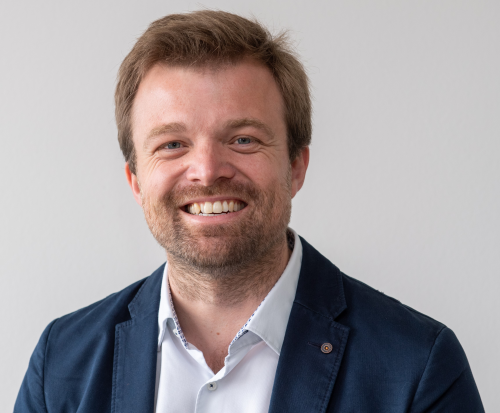 Dr. Emile de RijkCEOSWISSto12 SADr. Emile de Rijk is the CEO and co-founder of SWISSto12. He established the company in 2011 as a spin off from EPFL (École Polytechnique Fédérale de Lausanne). Under his leadership, SWISSto12 has grown into one of the world's fastest-growing aerospace companies and leading manufacturer of advanced space and telecommunication systems including its flagship product line: HummingSat. This has made it one of the only scale-up companies to have earned the trust of global satellite communication operators to deliver entire satellites and systems. In recognition of this achievement and his contribution to the industry, he was named 2024 Satellite Executive of the Year. Emile holds a PhD in Physics from EPFL. He has raised 100+ mCHF in funding and closed 500+ mCHF in commercial contracts with SWISSto12, and is the co inventor of more than 15+ patents related to advanced radio-frequency and space technologies.
Hervé DerreyCEOThales Alenia SpaceHervé Derrey is Chief Executive Officer of Thales Alenia Space. He was previously Senior Vice President and Chief Operating Officer of the Thales Secure Information and Communications Systems Global Business Unit. In 2011, he was named Vice President, Strategic and Infrastructure Networks, then from 2012 to 2016 served as Vice President for Thales' global Radiocommunication Products Business Line. From 1991 to 2011, Hervé Derrey held various management positions in France and abroad, first at Alcatel, then Alcatel Lucent, with a particular focus on mobile networks and applications, broadband internet and digital transformation. A graduate of École Polytechnique and Telecom ParisTech, Hervé Derrey, 53, also holds a degree from the Institut des Hautes Etudes de Défense Nationale (IHEDN), the national defense college.
Dr. Emile de RijkCEOSWISSto12 SADr. Emile de Rijk is the CEO and co-founder of SWISSto12. He established the company in 2011 as a spin off from EPFL (École Polytechnique Fédérale de Lausanne). Under his leadership, SWISSto12 has grown into one of the world's fastest-growing aerospace companies and leading manufacturer of advanced space and telecommunication systems including its flagship product line: HummingSat. This has made it one of the only scale-up companies to have earned the trust of global satellite communication operators to deliver entire satellites and systems. In recognition of this achievement and his contribution to the industry, he was named 2024 Satellite Executive of the Year. Emile holds a PhD in Physics from EPFL. He has raised 100+ mCHF in funding and closed 500+ mCHF in commercial contracts with SWISSto12, and is the co inventor of more than 15+ patents related to advanced radio-frequency and space technologies.
Hervé DerreyCEOThales Alenia SpaceHervé Derrey is Chief Executive Officer of Thales Alenia Space. He was previously Senior Vice President and Chief Operating Officer of the Thales Secure Information and Communications Systems Global Business Unit. In 2011, he was named Vice President, Strategic and Infrastructure Networks, then from 2012 to 2016 served as Vice President for Thales' global Radiocommunication Products Business Line. From 1991 to 2011, Hervé Derrey held various management positions in France and abroad, first at Alcatel, then Alcatel Lucent, with a particular focus on mobile networks and applications, broadband internet and digital transformation. A graduate of École Polytechnique and Telecom ParisTech, Hervé Derrey, 53, also holds a degree from the Institut des Hautes Etudes de Défense Nationale (IHEDN), the national defense college.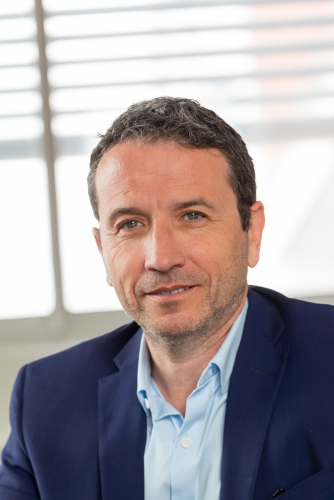 Mr Alain FauréHead of Space SystemsAirbusAlain Fauré has been Head of Space Systems within Airbus Defence and Space since 1st March 2024. He also became President of Airbus Defence and Space SAS France. He was previously Senior Vice President Engineering in charge of the Systems Centre of Competence in Airbus Commercial Aircraft. The Centre is responsible for Aircraft Systems for all Airbus aircraft (Aircraft Control, Cockpit and Avionics, Power on board, Landing Gear, Air Systems...). Alain was General Manager of Airbus Operations SAS France since 1st January 2023. He was also Chairman of Airbus Protect, an Airbus subsidiary that specialises in Product Safety and Cybersecurity services. Between 2014 and 2018 he was Head of Avionics and Simulation Products at Airbus Commercial Aircraft managing a team designing and manufacturing avionics products (electronics hardware and software) and simulation tools. Before joining Airbus in 2014, he held a variety of technical and management positions in Thales, where his last assignment was to manage the Electronics Centre of Competence for space application within Thales Alenia Space (TAS).
 Ryan TintnerVice President and General Manager, Space SuperiorityNorthrop GrummanRyan Tintner is the vice president of Civil Space Systems for Northrop Grumman. He directs the business strategy, development and execution of civil space programs ranging from human habitats and logistics services, to science and weather satellites. Previously at Northrop Grumman, Ryan was vice president of digital transformation. He was responsible for overseeing the company's digital transformation activities across the full digital thread ranging from digital engineering and manufacturing to supply chain and project execution. Additionally, Mr. Tintner was Vice President for the Air Warfare Systems business, which included electronic warfare, targeting and tactical unmanned aerial system radars. Other previous assignments included technical development and leadership on tactical and ISR radars, as well as undersea systems across the full lifecycle from development to deployment, including direct support to the user community across the services and agencies. Mr. Tintner holds a bachelor's degree in computer science from the Georgia Institute of Technology, a master's degree in information security from the Johns Hopkins University, and a master of business administration from the Carey Business School. Northrop Grumman is a leading global aerospace and defense technology company. Our pioneering solutions equip our customers with the capabilities they need to connect and protect the world, and push the boundaries of human exploration across the universe. Driven by a shared purpose to solve our customers' toughest problems, our employees define possible every day.
GPS Is Not Enough: Resilient PNT for the Military Forces and Infrastructure That Depend on It
GPS jamming and spoofing have moved from theoretical vulnerability to documented operational reality across military theaters and civilian infrastructure, forcing a serious reckoning with the fragility of a system that now underpins everything from precision weapons to financial market timestamps. This session examines the layered PNT architecture the DoD and allied nations are building that combine signals from alternative GNSS constellations, LEO augmentation, inertial systems, and terrestrial beacons. The panel will also address where civilian critical infrastructure is dangerously far behind military resilience planning.
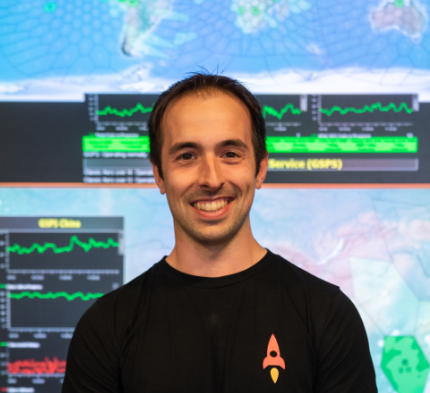 Brian ManningCEO & Co-FounderXona Space SystemsBrian Manning is co-founder and CEO of Xona Space Systems, a startup that is focused on maximizing the positive impact of modern technologies by providing the globally accessible and assured source of precise location and time needed for these them to operate safely at scale. Brian holds an MBA from the London Business School and an MSc in Aeronautics and Astronautics from Stanford University. He is a former SpaceX engineer coming from an entrepreneurial background of small family businesses, and co-founded Xona in 2019 with a team of GNSS and satellite experts coming out of the Stanford University GPS lab.
Launch Services: New Options for Tight Schedules
The launch market has transformed faster than almost any other segment of the space industry, with new entrants, reusable vehicles, and rideshare aggregators creating flexibility that simply didn't exist five years ago. This session examines what the current menu of launch options actually looks like for satellite operators with non-negotiable schedule requirements: which providers have demonstrated the reliability and cadence to be trusted for time-sensitive missions, what rideshare constraints (orbit, inclination, schedule slippage risk) operators need to understand before committing, and how dedicated small launch compares on total cost when schedule delays are priced in.
5G GOVSATCOM-HUB: From a Marketplace for European Space Assets to Automated 5G-NTN Services and Seamless TN-NTN Connectivity
The EU GOVSATCOM Hub is conceived as a secure marketplace that matches the connectivity needs of authorized governmental users with satellite capacity offered by European resource providers. Evolving this marketplace into an operational platform for 5G-NTN services requires automated service provisioning, orchestration across heterogeneous infrastructures, and seamless continuity between terrestrial and satellite networks. This seminar presents the 5G GOVSATCOM-HUB approach to this evolution. First, it introduces an architecture that replaces manual, ticket-based interactions between the Hub and satellite operators with machine-to-machine procedures. By extending provider network management systems with cloud-native 5G and ETSI NFV-MANO capabilities, the framework enables the automated instantiation, monitoring, and termination of 5G-NTN services, including distributed user-plane functions and on-demand gNB instances. The seminar then presents a Smart Gateway framework that preserves active application sessions during vertical handovers between independently operated terrestrial and satellite 5G networks. A practical demonstration using separate 5G cores and a Release-17-aligned GEO NTN testbed shows how mission-critical traffic can remain uninterrupted during transparent TN-NTN handovers. Together, these developments provide a practical path from a marketplace for European space assets to automated, interoperable, and resilient end-to-end 5G-NTN services.
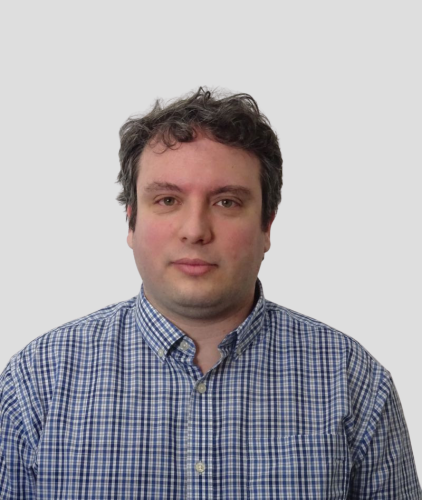 Dr. Miguel Angel Vazquez PhDHead of Space and Resilient Communications and SystemsCentre Tecnologic de Telecomunicacions de CatalunyaDr. Miguel Ángel Vázquez leads the Space and Resilient Communications and Systems (SRCom) unit at CTTC, focusing on xG NTN, tactical communications and optical/quantum communications. He has spearheaded major European projects such as 5G-GOVSATCOM and 5G-HUB, working closely with leading industry partners. With a track record of 50+ publications, he drives innovation at the interface of space and terrestrial networks, positioning CTTC as a key technology provider for the NewSpace and defense markets.
 -
GPU-Based Protection for High-Rate Atmospheric Optical Links
Protecting high-rate optical links has always been treated as a silicon problem. Fielded answers are ASICs or FPGAs: multi-year design cycles, high NRE cost, and protection committed in the design. We show it is now a software problem, solved on commodity GPUs -- not datacenter accelerators, but ordinary workstation cards. The atmosphere does not attenuate an optical link gracefully; it interrupts it. Turbulence drives received power below detection threshold for milliseconds at a time, and the link stays down for that fade plus modem reacquisition. When the signal is gone there is no coding gain to be had; only time diversity, information spread across an interval longer than the outage, bridges it. Interleavers apply this remedy at depths too shallow to span it. Our protection therefore operates on packets, above the physical layer, independent of the inner code and of physical-layer adaptation such as ACM. Time diversity at optical line rates is a memory problem: covering many outage cycles at 100 Gbps means holding and processing gigabytes at wire speed. LT3 fountain codes supply that depth, and protection at any level rather than a ladder of fixed rates. Very large, very fast memory with wide parallel processing describes a commodity GPU precisely. An FPGA or ASIC matches it only by committing to high-bandwidth memory and its datapath cost. Because the implementation is software, protection is configured at deployment, not committed at design. Coding depth, latency budget, and redundancy are independent controls, set to cover whatever outage the link exhibits and varied as it runs. No turbulence model is assumed; choosing the interval covers any outage distribution. The same software spans orbits: on GEO and MEO links, where round-trip time is long relative to the delivery deadline, protection is one-way; on LEO, a feedback mode reaches higher reliability with less added latency and less overhead. None of this depth costs throughput. On a single NVIDIA RTX 6000 Ada GPU, these same LT3 codes sustain 1.5 to 3 terabits per second in GPU memory, encoding and decoding alike, with headroom beyond those measurements. We move data GPU-to-GPU at 200 Gbps over RDMA in Unreliable Connection mode, reliability carried entirely by the code. The 200 Gbps is the network interface limit, not the code's. Coding latency stays well below the buffering interval the atmosphere dictates. The implementation is a working GPU prototype. We will present the coding rates and their parameters, the transport path and its bottleneck, recovery against emulated fade distributions across a range of outage durations and duty cycles, and free-space optical field results as available. Attendees will leave able to size protection against an outage distribution rather than a fade statistic, and to judge what a software data path delivers at optical line rates. The approach is content agnostic, sees only encrypted data, and needs no change to optical front-end hardware.
Michael LubyCTO & Co-FounderBitRipple, Inc.Dr. Michael Luby is currently CTO and cofounder of BitRipple. Previously, he cofounded and was CTO of Digital Fountain, and after its acquisition he was a VP of Technology at Qualcomm. He earned a BSc in Math from MIT and a PhD in Computer Science from UC Berkeley, he is an IEEE Fellow and an ACM Fellow. Recipient of multiple prestigious awards that underscore contributions spanning theory, practice, and global impact, including: the IEEE Richard W. Hamming Medal (2012); the ACM Paris Kanellakis Theory and Practice Award (2016); the ACM Edsger W. Dijkstra Prize in Distributed Computing (2016); the ACM SIGCOMM Test of Time Award (2009); the IEEE FOCS Test of Time Award (2022) for LT Codes; the ACM STOC 30-Year Test of Time Award (2022); and election to the National Academy of Engineering. -
Autonomous Satellite Networks: Where AI Delivers, Where the Hype Still Leads
Artificial intelligence is being applied across all satellite network operations. This session separates the deployments that are generating real operational value today from the capabilities that remain aspirational or are further from production than vendor marketing suggests. Panelists with hands-on experience operating large satellite networks will describe specific AI/ML use cases that have measurably improved throughput, reduced operator workload, or accelerated fault resolution, alongside areas where human oversight remains essential and automation claims outpace demonstrated reliability. The session aims to give network operators and procurement decision-makers a more grounded basis for evaluating AI-driven products and roadmaps.
Han ParkVice President, AI IntegrationNorthrop GrummanDr. Han Park is Vice President, Artificial Intelligence (AI) Integration for Northrop Grumman Space Systems sector. In this role, Dr. Park shapes the sector's vision and strategic direction for AI adoption in alignment with the enterprise vision. Partnering with divisions and teams across the sector and enterprise, his role is to accelerate the integration of AI into technical solutions, as well as expand development capability and create new AI applications and experiences that will support future business growth and create industry-leading capabilities for the sector. Prior to this role, Dr. Park was the deputy Chief Technology Officer and head of engineering at Supernal -- the Air Mobility division of the Hyundai Motor Group -- where he was responsible for the R&D strategy and execution of a battery electric Vertical Take-off and Landing aircraft which included its autonomous control system, digital platforms and connectivity solution. Prior to that, Dr. Park was a vice president at Samsung Electronics, where he led the Automotive Electronics business unit's development of an autonomous driving software platform, AI/machine learning (AI/ML) perception stack, AI/ML data pipeline and large-scale simulation and testing. Prior to his work in the consumer and tech industry, Dr. Park was a senior program manager and systems engineer at Northrop Grumman, as well as a senior research engineer at NASA's Jet Propulsion Laboratory. Dr. Park holds a doctorate in aeronautical engineering from Caltech. He also earned a master's degree in mechanical engineering from MIT as well as Master of Business Administration from UCLA.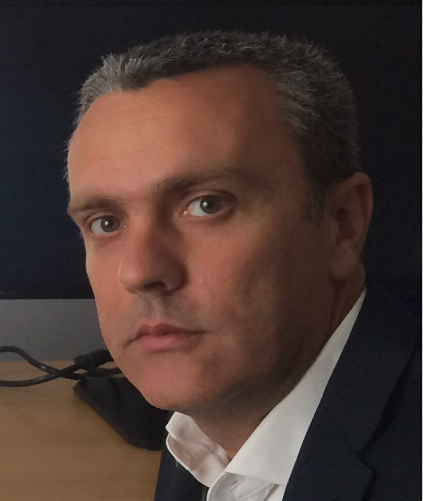 Pedro RuizR&D Director & Customer SuccessINTEGRASYS SAPedro Ruiz is an experienced telecommunication engineer, with more than 20 years experience working in the ITC and Telecom industry. From 2005 onwards, he has working within Integrasys as Innovation and Project Manager in the area of Advanced Systems and Customized Project Solutions for customers. For Integrasys, Pedro has been successfully managing more than 20 turnkey technological projects in the area of networked systems and RF signal processing. Pedro is elected member of the Steering Board of European Technology Platform for communications networks and services (https://www.networld2020.eu/steering-board/), 5G-PPP (https://5g-ppp.eu/our-members /), and European Industry Association for Embedded System (https://artemis-ia.eu/management.html).
The Race to D2D Delivery
Direct-to-device satellite connectivity has leaped to commercial product status in a remarkably short window, with multiple operators now offering or actively deploying D2D services. This session examines the competitive dynamics of a race where the finish line keeps moving. As operators achieve basic messaging connectivity, the next phase of competition shifts to voice, data speeds, and the MNO partnership structures that will determine which D2D services reach mainstream consumers versus remaining niche emergency fallback options. Panelists will address the technical constraints that still separate D2D ambitions from user experience parity with terrestrial mobile, including link budget physics, spectrum coordination with existing MNO allocations, and the device-side chipset ecosystem that must scale to make the economics work.
 Ramu PotarazuCEOLynk GlobalRamu, a tenured leader in the satellite industry, is the CEO of Elveo Mobile, a satellite-direct-to-device ("D2D") service provider. Widely recognized for creating shareholder value, he has served as CEO of EditShare and Binary Fountain. He is also the founder and former CEO of Vubiquity, now an Amdocs company (NASDAQ: DOX). Before founding Vubiquity, Ramu spent 15 years in various leadership roles at Intelsat (1991-2006). He previously held the roles as Intelsat's Chief Information Officer (CIO), Vice President of Operations, and Vice President of Commercial Restructuring. In 2001, he was appointed President of Intelsat Global Service Corporation and as President and Chief Operating Officer (COO) of Intelsat Ltd. Ramu holds a BS in Computer Science and Mathematics from Oklahoma Christian University, an MSc in Electrical Engineering from Johns Hopkins University, and is an alumnus of the Stanford Executive MBA Program. He is a member of the SES Board, the world's largest satellite communications company, and serves on Lynk's Board of Directors.
 -
Common Processing Platforms for Defense SATCOM
The DoW's push toward common processing architectures, exemplified by programs like NuCore, represents a significant shift in how defense satellite systems are designed, procured, and sustained. Rather than custom hardware stacks for each program, the vision is a modular, software-defined processing environment where mission applications run on standardized compute platforms. This session examines what that transition means in practice for the defense hardware vendors who have built businesses around program-specific solutions: which product lines face commoditization, where proprietary value can still be sustained, and how companies are repositioning their roadmaps.
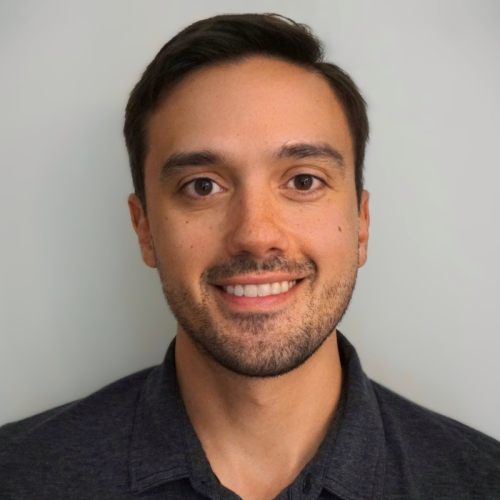 Eric AndenHead of Communications ProductsRamon.SpaceEric Anden currently serves as Head of Communication Products at Ramon.Space, a leader in space-resilient computing infrastructure. With over 13 years of industry experience, Eric has played a crucial role in inventing and developing groundbreaking satellite communication technology. His passion for space technology and bringing people together has been an inspiration for his work. Eric has spent years working on space-based processors, channelizers, modems, and beamformers at Boeing and SEAKR and has been credited with eight US patents for work on Virtual Payloads. Eric earned an BS in Aerospace Engineering from University of Illinois and MS in Electrical Engineering from Stanford University.
Connecting the Flight Deck: Real-Time Analytics and the Next Era of Aviation Safety
Satellite connectivity has transformed what's possible in aircraft health monitoring, predictive maintenance, and cockpit situational awareness -- but turning that data pipeline into actionable safety intelligence requires more than bandwidth. This session examines how airlines and avionics integrators are building real-time analytics platforms that ingest data from airborne sensors, ATC systems, and satellite links to detect anomalies, flag maintenance needs, and support pilot decision-making before issues become incidents. The session will also look ahead to how emerging LEO connectivity options are changing the latency and throughput assumptions that underpin aviation safety data architectures.
John PetersonExecutive Director of AviationIridium CommunicationsJohn Peterson is the Executive Director of Aviation at Iridium Communications Inc., the only satellite communications company that offers truly global voice and data coverage. In this role, John helps deliver Iridium's safety, voice and data solutions to pilots and operators. John is an aviation enthusiast and private pilot who has worked in the industry for 30 years in a variety of roles including engineering, product management and leadership roles at Boeing, Collins, Gogo and Honeywell. -
Test Before You Trust: Validating Satellite Networks Against Real-World Interference
As satellite networks take on more critical communications roles -- in defense, aviation, maritime, and emergency response -- the gap between lab validation and operational performance has never mattered more. This session focuses on the methods and tools used to stress-test satellite links against the interference environments they'll actually encounter: adjacent satellite interference, intentional jamming, terrestrial RFI, and multipath effects that benchtop testing rarely captures. Speakers will share case studies from both commercial and government programs where pre-deployment interference testing revealed problems that would have been costly or operationally catastrophic to discover in the field. The discussion will also address the emerging role of software-defined test platforms and digital twin environments in making rigorous interference validation more accessible.
Moderator
Juan VelasquezSenior RF Engineer IIRocket Lab USAWhy Hardware Still Matters: The Case for Quality in a Software-Defined Ground Segment
Software-defined networking and virtualized ground infrastructure have dominated the industry narrative for the better part of a decade -- but this session argues that the underlying hardware quality remains a decisive factor in system performance, reliability, and total cost of ownership. Panelists will make the case that antenna pointing accuracy, RF chain noise figures, power amplifier linearity, and mechanical durability aren't problems that software can fully compensate for, especially in high-throughput or interference-dense environments. The discussion will also address the vendor dynamics that emerge when operators treat hardware as a commodity: degraded manufacturing standards, supply chain consolidation risks, and the erosion of engineering expertise that is difficult to rebuild once lost.
Moderator
Lexie RobertsRF Engineer SeniorLockheed Martin Space Hagay KatzChief Product and Marketing OfficerGilat Satellite NetworksHagay serves as Gilat's Chief Product and Marketing Officer. Prior to joining Gilat, Hagay served as VP Strategic Accounts - Cyber Security at Allot Communications (Nasdaq - ALLT) where he was instrumental in transforming Allot to be the market leader of network-based cyber-security as-a-service for communication Service Providers. Previously he served as Gilat's Head of the VSAT Line of Business. In this period Gilat became the world leader for LTE cellular and commercial In-Flight broadband Connectivity over satellite. Earlier in his career, Hagay held senior positions in Sales, Marketing and Product Management at Modu Mobile, PacketLight Networks, which he co-founded (Acquired) and Telstra Research Laboratories. Hagay started his career in an elite technology unit of the IDF and is the co-author of nine granted patents. Hagay holds a BSc and MSc in Electronic Engineering from Tel-Aviv University and an MBA from Monash University.
Rob SullinsVice President, Growth and Strategy, Antenna TechnologiesCPIAs the vice president of growth and strategy for the Antenna Technologies division of Communications & Power Industries (CPI), Rob Sullins leads and oversees the strategic planning, execution, and growth of the company's antenna business in the commercial and defense sectors. Mr. Sullins has more than twenty years of experience in managing complex and high-stakes projects, products, and programs in the fields of electronics, embedded software, and systems engineering. He has a BSEE in Electrical Engineering from Oklahoma State University.
Hagay KatzChief Product and Marketing OfficerGilat Satellite NetworksHagay serves as Gilat's Chief Product and Marketing Officer. Prior to joining Gilat, Hagay served as VP Strategic Accounts - Cyber Security at Allot Communications (Nasdaq - ALLT) where he was instrumental in transforming Allot to be the market leader of network-based cyber-security as-a-service for communication Service Providers. Previously he served as Gilat's Head of the VSAT Line of Business. In this period Gilat became the world leader for LTE cellular and commercial In-Flight broadband Connectivity over satellite. Earlier in his career, Hagay held senior positions in Sales, Marketing and Product Management at Modu Mobile, PacketLight Networks, which he co-founded (Acquired) and Telstra Research Laboratories. Hagay started his career in an elite technology unit of the IDF and is the co-author of nine granted patents. Hagay holds a BSc and MSc in Electronic Engineering from Tel-Aviv University and an MBA from Monash University.
Rob SullinsVice President, Growth and Strategy, Antenna TechnologiesCPIAs the vice president of growth and strategy for the Antenna Technologies division of Communications & Power Industries (CPI), Rob Sullins leads and oversees the strategic planning, execution, and growth of the company's antenna business in the commercial and defense sectors. Mr. Sullins has more than twenty years of experience in managing complex and high-stakes projects, products, and programs in the fields of electronics, embedded software, and systems engineering. He has a BSEE in Electrical Engineering from Oklahoma State University.
Thursday, March 11
-
Connecting Humanity to the Stars: NASA's Vision for the Future of Space Communications
As NASA leads humanity into a new era of space exploration, next-generation technology development and strategic industry partnerships are transforming space communications and navigation capabilities to enable a sustainable, multi-user space ecosystem from low Earth orbit to deep space. This session connects attendees with leaders from NASA's Space Communications and Navigation division to explore interoperable technology advancements, commercial space relay service offerings, Moon to Mars infrastructure needs, and relevant upcoming partnership opportunities. Greg Heckler will explore how NASA is transforming deep space communications to support the next era of lunar and Mars exploration by expanding capacity, enabling commercial partnerships, and building a resilient communications and navigation infrastructure beyond low Earth orbit. Marie Piasecki will discuss how NASA is advancing interoperable communications and navigation technologies to lay the foundation for resilient, scalable infrastructure that will support sustained lunar exploration and future missions to Mars. Luke Staab will inform the satellite industry of NASA's transition to commercial space relay services, and the new need to acquire S-band backwards compatible relay services for legacy missions. By working together, NASA and Industry can motivate the ITU/FCC to open the s-band spectrum to industry, allowing commercial partners to develop services for non-NASA users, opening an entirely new market.
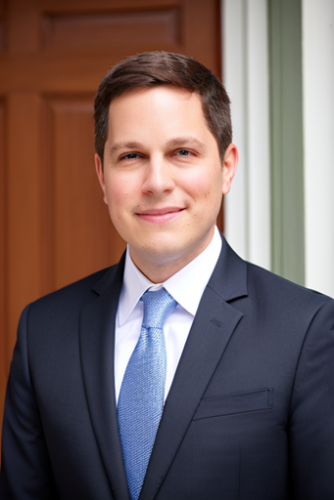 Greg HecklerDeputy Program Manager for Capability Development, NASA Space Communications and Navigation (SCaN)NASAGreg Heckler serves as the deputy program manager for capability development within NASA's SCaN (Space Communications and Navigation) Program. In this role, he oversees the planning and execution of technology and development initiatives to transform NASA's communication and navigation capabilities to support human and robotic exploration across Earth, the Moon, Mars, and deep space. His work also helps strengthen the broader space industry by fostering technologies and capabilities that benefit both government and commercial space missions. Before joining the team at NASA Headquarters, he worked as a telecommunications systems engineer at NASA's Goddard Space Flight Center in Greenbelt, Maryland. Early in his career, he contributed to the development of high-altitude Global Navigation Satellite Systems receiver technology and spent six years supporting the Tracking and Data Relay Satellite flight project. Originally from Ohio and Indiana, Greg holds both a bachelor's and a master's degrees in aerospace engineering from Purdue University.
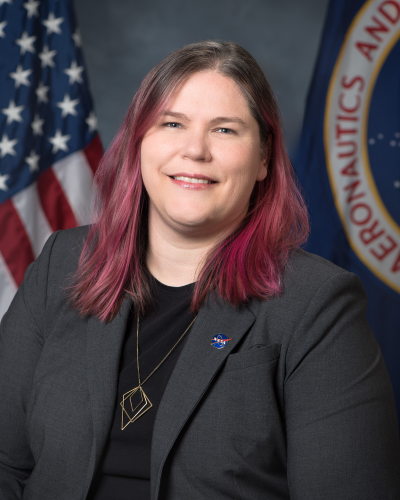 Marie PiaseckiTechnology Portfolio Manager for Capability Development, NASA Space Communications and Navigation (SCaN)NASAMarie Piasecki serves as the Technology Portfolio Manager for Capability Development within NASA's Space Communications and Navigation division, where she leads the advancement of next-generation communications technologies to unlock new capabilities for space missions in low Earth orbit, cislunar orbit, and deep space.
 Luke StaabCommunications Services Project (CSP) Project ManagerNASALuke Staab currently serves as the Project Manager for the Communications Services Project at NASA's Glenn Research Center in Cleveland. In this capacity, he directs NASA's transition from government owned and operated satellite relay services to commercial owned and operated satellite relay services - a historic first for the agency. Prior to joining the Space Communications and Navigation Program in June of 2025, Luke spent two decades building a distinguished career at NASA. He started at Glenn as an aerospace engineer in 2009 supporting the Structural Dynamics Branch before transitioning to the Chief Engineer's Office where he served as NASA's Technical Test Lead for the European Service Module Structural Test Article campaign. Building on his technical expertise, Luke took on greater leadership responsibilities as Deputy Chief Engineer for the Space Launch System's Universal Stage Adapter and Payload Fairing, culminating to his appointment as Chief of the Structural Dynamics Branch in 2018. In 2022, Luke transitioned to NASA's Neil Armstrong Test Facility in Sandusky, Ohio as a Senior Project Manager, overseeing simultaneous test campaigns for major industry partners including SpaceX, Lockheed Martin, and Sierra Space - most notably managing the Sierra Space Dream Chaser testing effort. By 2024, he assumed the role of Structures and Mechanisms Subsystem Manager for the Gateway Program's Power and Propulsion Element, leading interface management with contractor Maxar and coordinating technical requirements across program levels. Most recently, in March of 2025 Luke was named Project Manager for the Argonaut Lunar Lander, a collaborative initiative with the European Space Agency to develop a cargo lander for the Artemis campaign.
 -
Chemical, Electric, Multimodal, Solar Sail: The Next Generation of In-Space Propulsion
The diversity of in-space propulsion technologies available to satellite operators has expanded dramatically in recent years, with electric propulsion now standard on many GEO and LEO platforms and newer modalities -- including solar sails, nuclear thermal concepts, and multimodal hybrid systems -- advancing through development and early demonstration. This session surveys the current state of each major propulsion approach, focusing on the performance trade-offs that matter most for different mission profiles: orbit raising time, specific impulse, thrust levels, power constraints, and compatibility with smallsat form factors. Panelists will also address the business case for propulsion investment in a market where satellite lifespans, deorbit requirements, and in-orbit servicing economics are all in flux. The session is relevant for satellite manufacturers, mission planners, and investors trying to understand where propulsion technology is heading and who the credible players are.
 Dr. Shae WilliamsStaff Project EngineerMoog Inc.Dr. Williams received his doctorate from Purdue University for work designing new RF microthermal electric propulsion thrusters. Since then, he has spent 13 years in industry at small and large companies focused on in-space propulsion, rising to Chief Engineer and head of the engineering division at Digital Solid State Propulsion in Reno, Nevada. There, he focused on liquid and solid propulsion enabled by novel new chemistry formulations, culminating in a successful flight of the Spinsat mission. Dr. Williams is currently a Staff Engineer in Moog's Engines group, with the portfolio of determining group strategy, developing new technologies in in-space propulsion, and bringing them to market.
Building the Industrial Base Before the Next Crisis: Manufacturing, Workforce, and the Domestic Space Supply Chain
The vulnerabilities in the domestic space industrial base caused by single-source components, workforce gaps in systems engineering and specialized manufacturing, and offshore dependencies for critical materials, became impossible to ignore during recent supply chain disruptions. Investment in fixing these vulnerabilities remains inconsistent with the urgency the rhetoric implies. This session asks what it actually takes to build resilient domestic manufacturing capacity in satellite structures, propulsion, microelectronics, and RF components before the next crisis makes the cost of neglect undeniable.
Nihar ShahChief Strategy OfficerSES